When was the last time you stopped to really look at a tree?
Not just walked past it on the school run or admired its autumn colours through the car window, but properly stopped to notice its twisting branches, patterned bark or the tiny creatures living among its roots?
For young children, trees are so much more than part of the landscape.
They’re places to hide, things to climb, homes for wildlife, sources of fascinating natural treasures and wonderful starting points for imaginative adventures.
Here at A Touch of the Wild, in our beautiful Devon woodland near Exeter, trees are part of our everyday world. They provide shelter, inspire curiosity and offer endless opportunities for children to learn through play.
And this November, there’s a lovely reason to celebrate them.
What is National Tree Week?
National Tree Week takes place from 21-29 November 2026, bringing people together across the UK to celebrate trees and mark the beginning of the winter tree-planting season.
Organised by The Tree Council, this year’s theme is Trees Near You.
It’s all about recognising the trees that are already part of our everyday lives, whether they’re growing in a local park, a school playground, a garden or a beautiful stretch of Devon woodland.
Trees do so much for our environment. They provide food and shelter for wildlife, support biodiversity, absorb carbon dioxide and help make our communities greener and more enjoyable places to spend time.
But for young children, their value is often much simpler.
A tree is something to investigate, explore, wonder about and develop a connection with.
National Tree Week is the perfect opportunity to slow down, head outdoors and help children discover just how amazing trees really are.
And the good news? You don’t need any specialist equipment, expensive resources or complicated activities.
Here are five of our favourite ways to celebrate.
1. Become a tree detective
Have you ever noticed how different trees can be?
Some have smooth, pale bark. Others are rough and deeply ridged. Some have enormous trunks, while others have slender branches that sway in the breeze.
Take your little explorer on a tree detective adventure and see what they discover.
Start by choosing two or three trees in your local park, garden or woodland.
Encourage your child to look carefully.
- Which tree has the biggest trunk?
- Can they find different shapes of leaves on the ground?
- Does the bark feel smooth, rough or bumpy?
- Which tree has the most interesting branches?
- Can they spot any birds, insects or signs of wildlife?
Older children might enjoy trying to identify different species, such as oak, beech or silver birch, using a simple tree identification guide.
For younger children, the joy is simply in noticing differences.
What are they learning?
Observation, comparison, descriptive language and early scientific thinking.
They’re also beginning to understand that trees, just like people, come in all sorts of shapes and sizes.
2. Create an autumn leaf rainbow
November is a wonderful time for spotting colour in the natural world.
Even as the last leaves begin to fall, woodland paths can be scattered with golden yellows, rusty oranges, deep browns and beautiful shades of red.
Why not turn your next walk into a colour hunt?
Give your child the challenge of finding fallen leaves in as many different colours as possible.
Once you’ve gathered a small collection, arrange them on the ground to create a woodland rainbow.
You could even try sorting them from lightest to darkest, smallest to largest or by their different shapes.
For a creative twist, take a photograph of the finished rainbow or use a few fallen leaves to make a piece of artwork at home.
There is no need to pick leaves from living trees. The woodland floor usually provides plenty of natural treasures.
What are they learning?
Colour recognition, sorting, counting, pattern-making and creativity.
They’re also developing an awareness of seasonal change as they discover how trees prepare for winter.
And perhaps most importantly, they’re learning that beautiful things can be created using simple materials found in nature.
3. Make magical bark rubbings
Tree bark is one of nature’s most fascinating textures.
Some trees have deep grooves, others have delicate patterns, and every trunk tells its own story.
Bark rubbing is a lovely, simple activity that allows children to explore these differences while creating their own woodland artwork.
You’ll need:
- A few sheets of paper
- Wax crayons with the paper wrappers removed
- A tree with an interesting bark texture
Gently hold a piece of paper against the trunk and rub the side of a crayon across it.
As the colour appears, the patterns of the bark begin to emerge.
Try repeating the activity with different trees and comparing the results.
Does every tree produce the same pattern? Which one has the deepest grooves? Which rubbing is their favourite?
For younger toddlers, an adult can help hold the paper while little hands experiment with the crayons.
Take care not to damage the bark, and leave the tree exactly as you found it.
What are they learning?
Fine motor control, sensory exploration, concentration and an appreciation of natural patterns.
Children also begin to recognise that different trees have unique characteristics.
And there’s something wonderfully exciting about watching a hidden pattern appear on the page!
4. Go on a woodland listening and sensory adventure
Trees aren’t just interesting to look at.
Woodlands are full of wonderful sounds, smells and textures, particularly during autumn when the ground is covered in fallen leaves.
Next time you’re outdoors, try slowing everything down.
Find a comfortable place near a tree and spend a little time listening together.
Can you hear the wind moving through the branches?
Are birds calling somewhere nearby?
What sound do your footsteps make when you walk through dry leaves?
Does the woodland smell different after rain?
Encourage your child to describe what they notice.
You could also turn the experience into a simple sensory scavenger hunt.
See whether they can find something soft, something rough, something colourful and something that makes an interesting sound.
There’s no need to collect everything. Sometimes looking, listening and touching gently is enough.
Remind children not to taste unfamiliar plants or fungi, and to leave wildlife and its habitats undisturbed.
What are they learning?
Sensory awareness, listening skills, concentration, vocabulary and curiosity about their surroundings.
For younger children, exploring the world through their senses is an important part of early development.
And for grown-ups, it’s a lovely excuse to slow down too.
5. Choose a special tree and watch it change
This might be our favourite activity of all because the adventure doesn’t end when National Tree Week finishes.
Invite your child to choose a favourite tree.
It could be one in your garden, a local park or somewhere you visit regularly.
Spend some time getting to know it.
What does it look like today? Are there still leaves on its branches? Are there any interesting shapes in its bark? Can you spot birds using it as a resting place?
Take a photograph or encourage your child to draw a picture.
Then return to the same tree in a few weeks.
Has anything changed?
As winter turns into spring, you can continue visiting and watching for new buds, leaves and signs of life.
Over time, children begin to recognise the changing seasons through something familiar and meaningful.
Their tree becomes more than just another tree.
It becomes their tree.
What are they learning?
Patience, observation, memory, seasonal awareness and the beginnings of environmental responsibility.
Developing a personal connection with nature is a wonderful first step towards wanting to care for it.
Why spending time among trees matters for children
Of course, these activities are only a starting point.
One of the most valuable things about woodland play is that children don’t always need an organised activity to make meaningful discoveries.
Sometimes they simply need the freedom to explore.
A fallen branch might inspire a building project. A patch of leaves could become an imaginary woodland café. A tiny creature discovered beneath a log might spark an entire afternoon of questions.
Trees and natural spaces offer children countless opportunities to move, investigate, imagine and experiment.
At Forest School, this kind of learning happens naturally.
Children develop their physical confidence as they navigate uneven ground, practise communication when working together and strengthen their curiosity as they explore the world around them.
And because the woodland changes throughout the year, there is always something new to discover.
Bringing the magic of woodland learning to Wild Tots
At A Touch of the Wild, we believe that a love of nature can begin from the very earliest years.
Our Wild Tots sessions are a wonderful introduction to Forest School for babies, toddlers and young children aged from newborn to five, accompanied by their grown-ups.
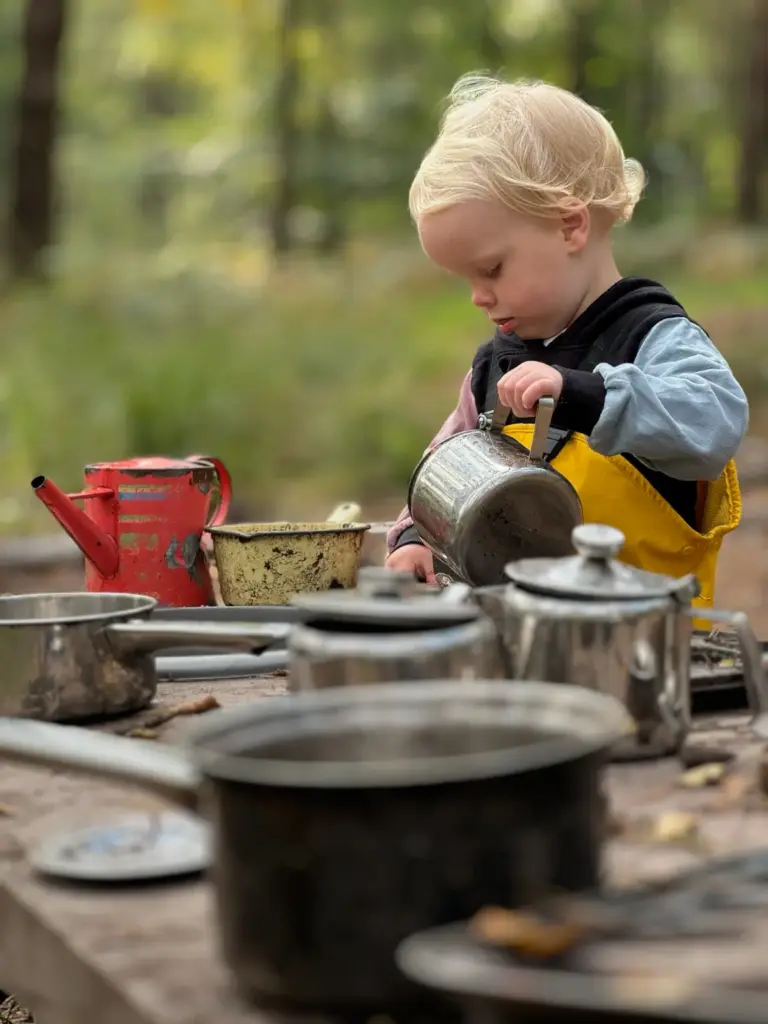
Held in our private woodland near Exeter, these friendly, 90-minute sessions offer opportunities for natural crafts, sensory exploration, mud kitchen adventures, storytelling, songs and campfire snacks.
Children are encouraged to explore at their own pace, while parents and carers can enjoy spending quality time together outdoors and meeting other local families.
Whether your little one is fascinated by collecting leaves, loves making muddy potions or simply enjoys watching the world around them, there’s something special about sharing these early experiences in nature.
And November is a beautiful time to discover the woodland, with its changing colours, crisp air and wonderful seasonal treasures.
Just remember the waterproofs, warm layers and wellies!
Let’s celebrate the trees on our doorstep
National Tree Week is a lovely reminder that we don’t have to travel far to enjoy the wonders of nature.
A favourite tree in the park, a woodland path covered in leaves or even a few minutes watching birds among the branches can create moments of discovery and connection.
For children, these small experiences often become treasured memories.
And when we encourage them to notice, explore and appreciate the natural world, we’re helping to nurture a relationship with nature that can last a lifetime.
So this National Tree Week, why not wrap up warm, pull on your wellies and head outside together?
You never know what your little explorer might discover.
Come and experience the magic of Wild Tots
If you’d love your child to enjoy more outdoor adventures, we’d be delighted to welcome you to A Touch of the Wild.
Our Wild Tots sessions are full of woodland discoveries, creative play, fresh air and special moments together.
Discover Wild Tots and book a taster session in our Devon woodland.